


 Kliknutím zobrazíte
„Společnost se drží obchodní filozofie z ‚Ty vyhraješ, já vyhraju‘“
Ask a room full of textile people what aromatic polyamide fiber is and you will get a few different answers. A chemist will describe a polyamide in which at least 85 percent of the amide linkages are attached directly to aromatic rings. A weaver will talk about the cloth that refuses to melt and refuses to tear. A buyer will simply say "aramid" and ask for the datasheet. All three are right, and the space between those answers is where the practical decisions actually live.
We have spent more than two decades around spinning frames, and high-performance fibers still get our attention. This guide walks through what aramid is, how it is made, how it behaves on textile machinery, and where it genuinely earns its price.
What the Chemistry Actually Changes
In an ordinary aliphatic polyamide such as nylon, the amide groups sit along a flexible chain. In an aromatic polyamide, those amide groups hang directly off benzene rings. The rings are stiff, flat, and hard to rotate, so the polymer backbone behaves more like a rod than a rope. Chains pack closely, hydrogen bonds form in a very regular pattern, and the result is a fiber with exceptional tensile strength, a high modulus, and remarkable thermal stability.
That stiffness explains most of the behavior downstream. Aramid does not really melt in the way polyester does. It holds its structure until it begins to degrade and char, typically above 400 °C for the para variant. It also has low elongation, limited moisture regain, and a surface that is chemically quiet, which is a polite way of saying it is difficult to dye and sometimes difficult to bond.
Because the molecules are so rigid, they can be spun from a liquid crystalline solution. The orientation that develops during spinning is what produces the celebrated strength-to-weight ratio, often described as five to six times that of steel on an equal-weight basis. That number is real, but it comes with a caveat: the same stiffness that gives the strength also gives poor fatigue resistance in compression and a tendency to fibrillate under abrasion.
Two Families, Two Very Different Yarns
Aramid is a family, not a single product. The two commercial branches differ in where the amide linkage attaches to the ring, and that small structural difference produces very different textile behavior.
| Property | Meta-aramid | Para-aramid |
|---|---|---|
| Linkage position | Meta (1,3) | Para (1,4) |
| Tenacity | 3.5-5 cN/dtex | 18-24 cN/dtex |
| Elongation at break | 20-40 percent | 2.5-4 percent |
| Continuous service heat | 200-250 °C | 150-200 °C in air |
| Flame behavior | Char-forming, self-extinguishing | Char-forming, self-extinguishing |
| Dyeing | Possible with carriers, limited shades | Essentially solution-dyed only |
| Typical use | Protective clothing, electrical insulation, filtration | Ballistics, composites, ropes, cut protection, tires |
Meta-aramid feels and processes much more like a conventional textile fiber. It has enough elongation to be carded, spun, and woven on normal equipment, and it is the grade most often blended with flame-retardant viscose or modacrylic for protective workwear. Para-aramid is a different animal: very high strength, very low elongation, and almost no forgiveness in the card room.
How the Fiber Is Made
Both families begin with polycondensation, but the routes diverge quickly. Para-aramid is usually polymerized at low temperature in an amide solvent with a salt present to keep the rigid chains in solution. The dope is already liquid crystalline, so it can be spun through an air gap into a coagulating bath, a dry-jet wet spinning process that allows the molecules to align along the fiber axis as they leave the spinneret. The yarn is then washed, drawn under tension, and heat-treated to lock in the orientation.
Meta-aramid is polymerized from a different diamine and diacid combination, often by interfacial or low-temperature solution methods. It is spun either by dry spinning, where the solvent evaporates in a heated shaft, or by wet spinning into a coagulation bath. The lower orientation and more modest crystallinity give it the flexibility and elongation that textile processors appreciate.
In both cases, the finishing step matters more than buyers expect. A spin finish has to control static, reduce fiber-to-fiber friction, and protect the surface during carding and spinning, because aramid does not respond well to the lubricants designed for polyester or cotton.
Why Spinners Treat It With Respect
Running aramid through a staple spinning line is a lesson in patience. The fiber has low elongation, so it does not draft the way polyester or viscose does. Opening and carding need gentler settings, lower tensions, and clean, well-maintained wire. Static builds quickly because moisture regain is low, which means humidity control in the spinning room is not optional.
Aramid also abrades the tooling. It wears guides, rings, and aprons faster than conventional fibers, and ceramic or coated contact points pay for themselves. Short-staple blending with meta-aramid, flame-retardant viscose, or modacrylic is common, partly to improve processability and partly to soften hand and cost.
Core-spun construction is one of the most practical ways to use high-tenacity aramid. A filament or high-strength staple core carries the load, while a staple sheath provides bulk, comfort, and something that will actually take color. Mills that already build core-spun yarns have a natural entry point into this fiber family.
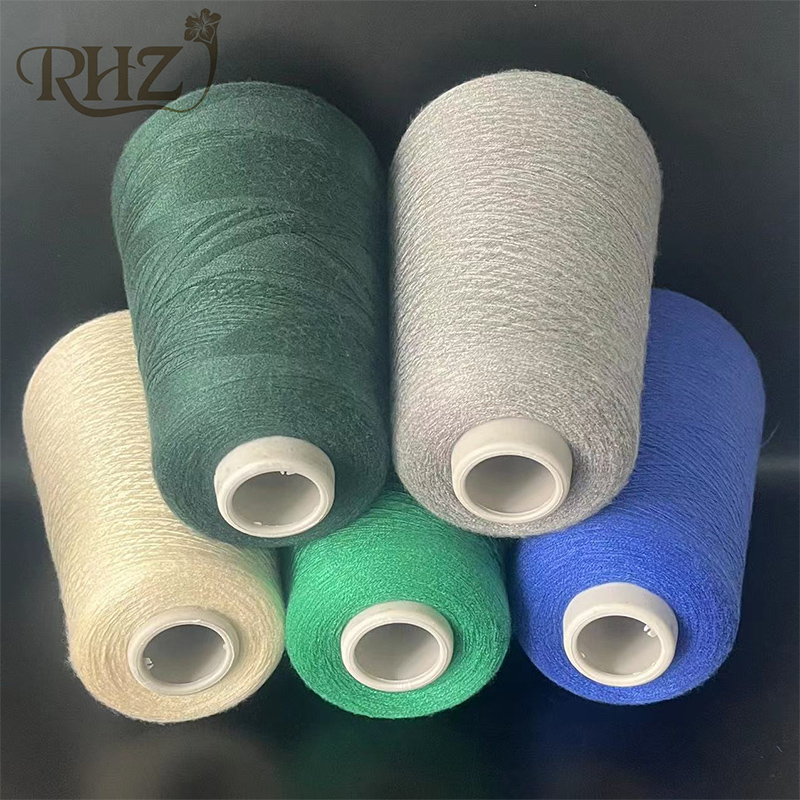
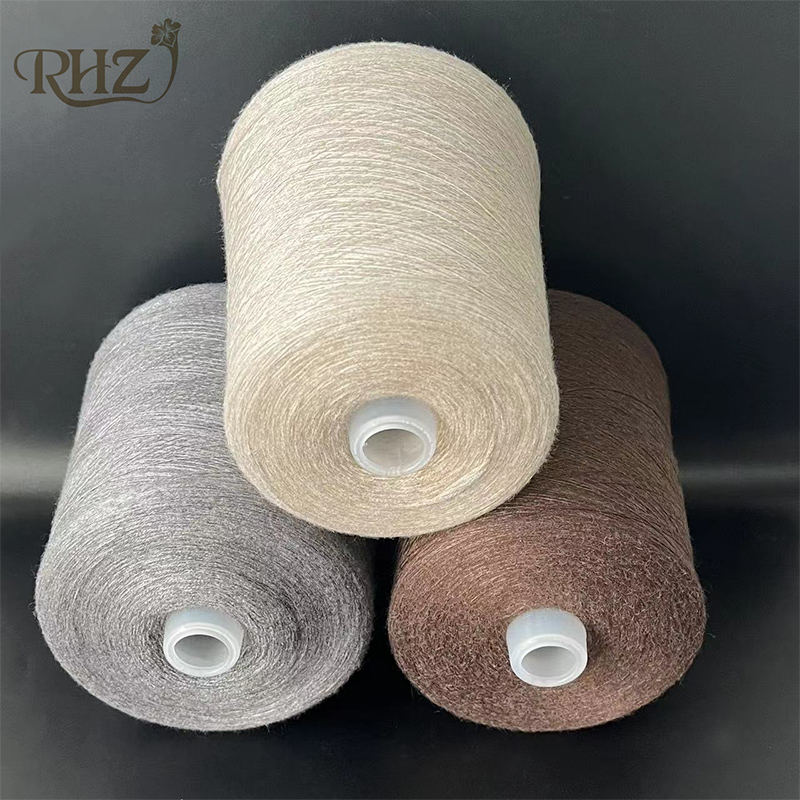
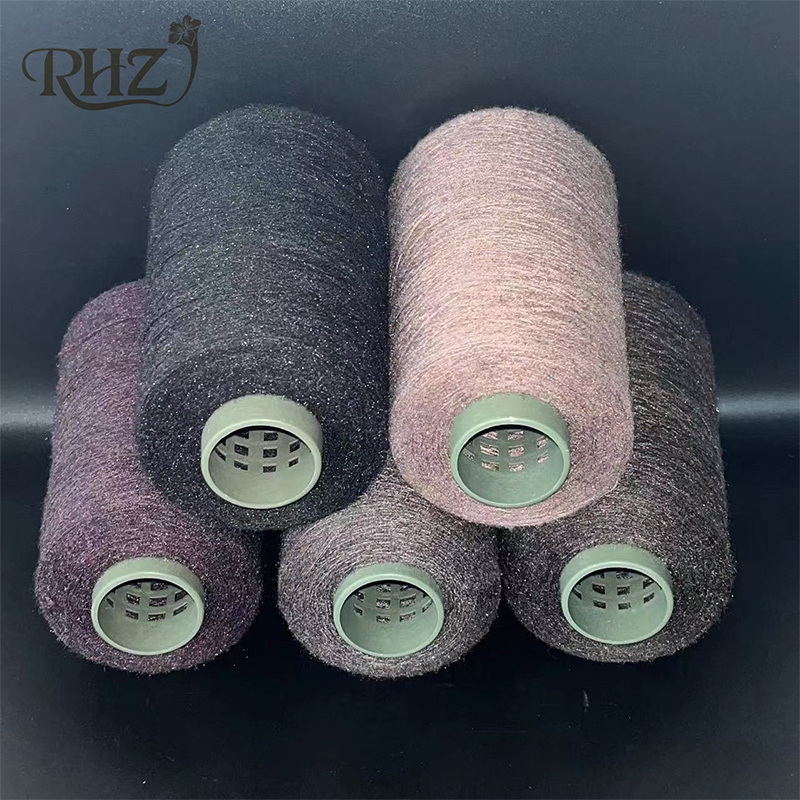 Core Spun Knitting Yarn RangeExplore core-spun knitting yarn variants with filament cores and staple sheaths, offering stretch, comfort, and a practical route into high-tenacity fiber constructions.View Product →
The same logic applies to weaving. High-modulus yarns need uniform tension and careful weft insertion, and fabrics are usually designed with the aramid content concentrated where mechanical or thermal protection is required, rather than spread evenly through the cloth.
Where It Earns Its Price
Para-aramid shows up wherever failure is expensive. It reinforces tires, hoses, and drive belts. It appears in ballistic vests, helmets, cut-resistant gloves, ropes, cables, and composite structures for aerospace and sporting goods. In fabrics, it is used for protective outerwear, chain-saw protection, and reinforcement panels.
Meta-aramid is the heat-and-flame specialist. Firefighter turnout gear, industrial workwear, thermal liners, electrical insulation paper, and hot-gas filtration are its home ground. It also appears in aircraft interiors, where low smoke and non-drip behavior matter as much as flame resistance.
Outdoor equipment is another growing area. Aramid reinforcement can add tear strength and dimensional stability to packs, tents, and technical panels without adding much weight. Our own weaving line includes an Italian panel line built for outdoor applications, and it is the kind of place where a high-modulus yarn can be put to work alongside more familiar fibers.
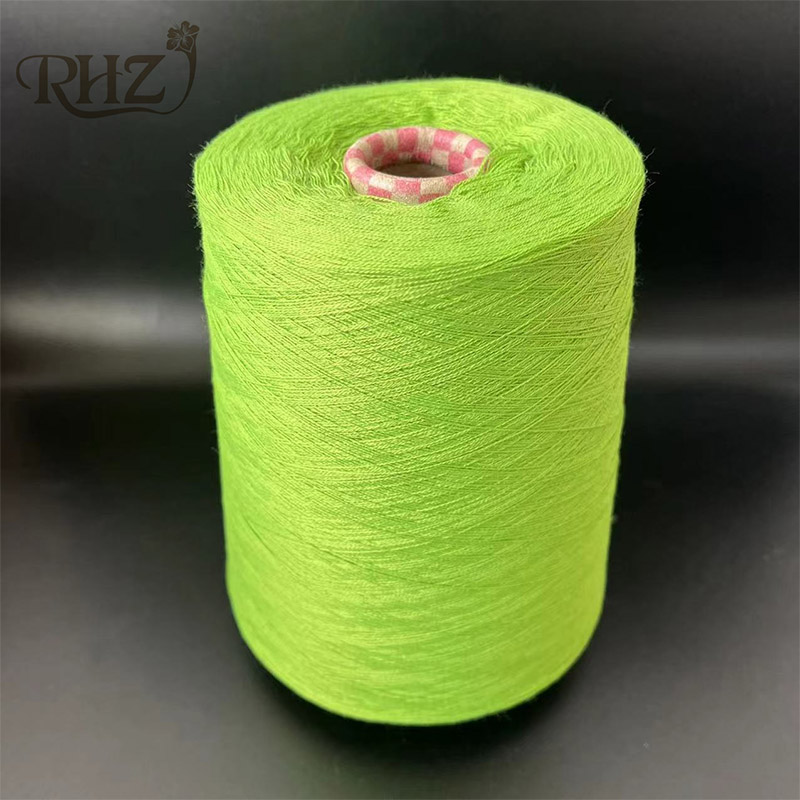 Acrylic Outdoor Yarn for Durable Outdoor Textiles100% acrylic 34NM/2 yarn intended for cushions, rugs, and patio textiles, with UV, mildew, and fade resistance for outdoor durability.View Product →
Blending, Dyeing, and the Color Question
Color is the point where aramid reminds you that it is a high-performance material. Para-aramid is essentially undyeable in conventional piece-dyeing; the color has to go into the polymer or the spinning dope. Meta-aramid can be dyed with carriers under pressure, but the shade range is limited and the process can cost strength. That is why so much aramid fabric reaches the market in its natural yellow or in a solution-dyed tone.
This is familiar territory for anyone who works with color-spun yarns. Dyeing the fiber before spinning, rather than the fabric after weaving, gives consistent shade, better penetration, and fewer surprises in bulk. The principle is the same whether the polymer is acrylic, polyester, or aramid. If you want to understand how color is handled upstream, our company background describes the color-spun route in more detail.
Blending decisions also affect dye behavior. A blend of meta-aramid and flame-retardant viscose will take color differently in each component, so the target shade has to be developed with the blend in mind rather than applied afterward.
A Practical Checklist Before You Specify
Whether you are buying aramid yarn or building a fabric around it, a short conversation up front saves a long one later. We usually ask the following:
- Which family is required, meta or para, and is the requirement heat, flame, cut, or tensile driven?
- What linear density and staple length are specified, and what spin finish is compatible with your downstream process?
- Will the fiber be blended, and if so, what is the blend ratio and the expected dye route?
- Is the color expected from solution dyeing, or will the fabric be piece-dyed?
- What tenacity and elongation values are acceptable, and is there a certification or test standard to meet?
- Does the yarn need to be core-spun, plied, or heat-set before weaving or knitting?
Clear answers to those questions will tell you more than a marketing brochure ever will.
Aromatic polyamide fiber rewards people who plan for it. It is not a drop-in replacement for polyester, and it will not behave politely on a line set up for commodity yarns. But when the application genuinely needs heat resistance, flame protection, or strength per unit weight, there is very little else that performs the same way.
If you are working through a specification and want a second opinion on spinning, blending, or core-spun construction, our team is always happy to talk through the practical details. You can reach us here.
